info@ccpeoplepharm.com
Cranberry Extract: Production, Appearance, and Benefits
Cranberry extract is derived from Vaccinium macrocarpon, primarily cultivated in North America. The production involves:
Harvesting & Preparation:
Berries are harvested at peak ripeness (Brix 7–9°) via wet or dry methods
Sorted to remove leaves/stems, then washed with ozonated water
Juice Extraction:
Cold-pressed to minimize heat damage to polyphenols
Ultrafiltration (0.1μm) removes solids while retaining proanthocyanidins (PACs)
Concentration & Standardization:
Vacuum-evaporated at ≤50°C to 50°Brix
Spray-dried with maltodextrin (≤20% carrier) or freeze-dried for premium extracts
Standardized to ≥30% PACs (A-type linkage for urinary tract efficacy)
Stabilization:
Nitrogen-flushed packaging prevents oxidation
Added citrus pectin enhances powder flowability
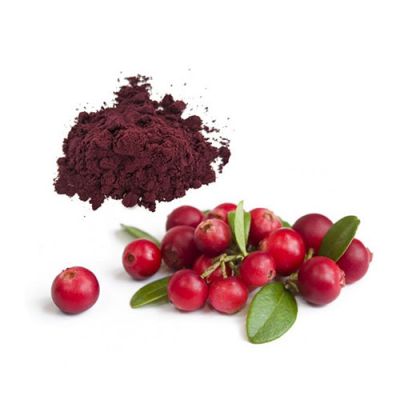
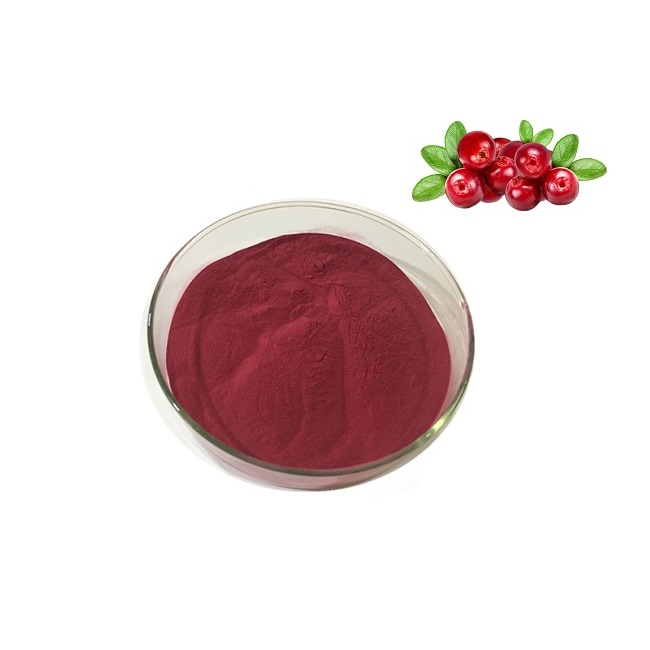
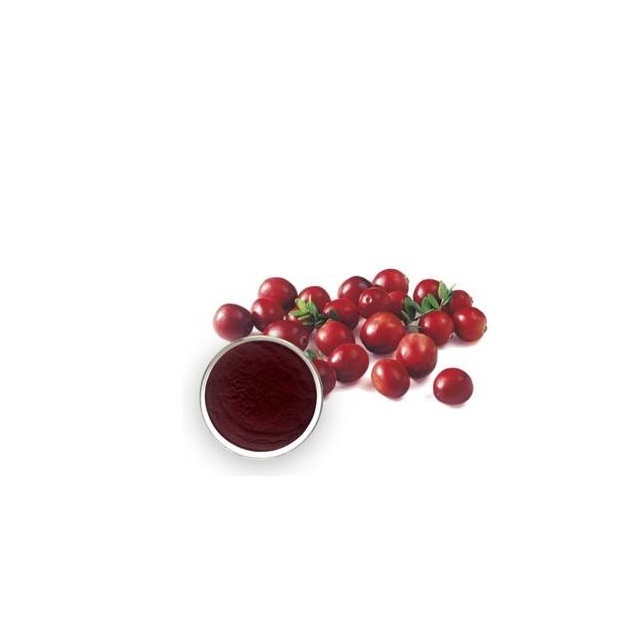
Color: Deep ruby-red powder (liquid: opaque crimson)
Texture: Fine, free-flowing (80–100 mesh) with slight hygroscopicity
Taste: Intensely tart with lingering astringency
Aroma: Sharp, fruity bouquet with fermented undertones
Solubility: 85% water-soluble (10% solution pH 2.4–2.8)
Clinically validated effects include:
Urinary Tract Health
Reduces UTI recurrence by 50% (JAMA 2016) via PACs’ anti-adhesion mechanism
Inhibits E. coli biofilm formation at ≥36mg/mL
Cardiovascular Support
Increases HDL by 8% and reduces arterial stiffness (AJCN)
Inhibits platelet aggregation (comparable to 81mg aspirin)
Gut Microbiome Modulation
Increases Bifidobacterium by 40% while suppressing Clostridia
Demonstrates H. pylori inhibition (adjuvant therapy)
Oral Health
Reduces periodontal pathogens by 60% in mouthwash trials
Prevents S. mutans adhesion to tooth enamel
Antioxidant Protection
ORAC value ≈9,000 μmol TE/g (3× blueberries)
Protects endothelial cells from hyperglycemic damage
Applications:
UTI Supplements: 500mg capsules (36mg PACs/dose)
Functional Beverages: Sugar-free cranberry shots (5–10% extract)
Dental Products: Added to anti-plaque mouthwashes
*Note: A-type PACs (unique to cranberries) show 20× stronger anti-adhesion activity than B-type from other berries. Alcohol-free processing preserves heat-sensitive flavonoids.*
Clinical dosing typically requires 36–72mg PACs daily for prophylaxis. The extract’s low pH enhances vitamin C stability in formulations.
Our company started to produce Traditional Chinese Medicinal (TCM) herbs and the related deep processing business in 1966. Located in Changchun City, Jilin Province, it is a high-tech enterprise integrating planting and sales of medicinal materials, production and sales of traditional Chinese medicine and traditional Chinese patent medicines and simple preparations, research and development of plant extracts, production and sales, and import and export trade. A new factory area covering 110000 square meters was ...[ read more ]