info@ccpeoplepharm.com
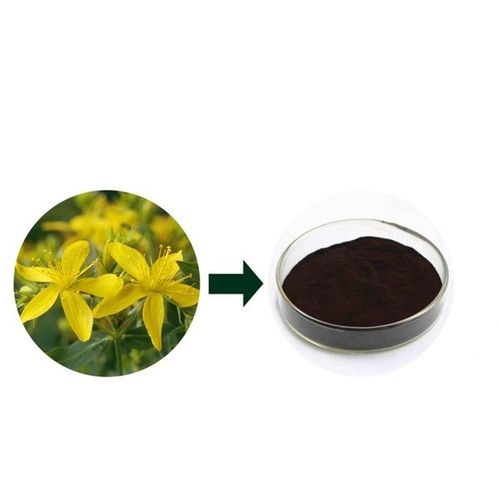
Saint John's Wort Extract: Overview, Benefits, and Applications
Overview
Saint John's Wort (Hypericum perforatum) is a flowering plant whose extracts, derived from the aerial parts (flowers and leaves), have been used for centuries in traditional European medicine. The modern standardized extract, typically available as a powder, capsule, or tincture, is one of the most extensively researched herbal remedies. Its activity is primarily attributed to a complex interplay of compounds, including hypericin, hyperforin, and flavonoids. It is crucial to note that this extract is widely recognized for its significant potential to interact with numerous prescription medications.
Benefits
The benefits of Saint John's Wort extract are predominantly linked to its effects on the central nervous system. Its most well-established and evidence-supported use is for the treatment of mild to moderate depression. Numerous clinical studies and meta-analyses have concluded that it is more effective than a placebo and similarly effective to some standard prescription antidepressants for this condition, with a potentially different side-effect profile. The proposed mechanism involves inhibiting the reuptake of key neurotransmitters like serotonin, dopamine, and norepinephrine, a action similar to that of several synthetic pharmaceuticals.
Beyond its primary application for mood, the extract possesses other valuable properties. It has demonstrated antiviral activity in laboratory settings, particularly against enveloped viruses like herpes simplex and influenza, partly due to the hypericin content. Topically, it is valued for its wound-healing and anti-inflammatory properties. Preparations like oils and creams are used to aid the healing of minor burns, wounds, and muscle aches. It also shows promise in alleviating symptoms of somatization disorder and anxiety, and may help reduce the severity of premenstrual syndrome (PMS).
Applications
The primary application of Saint John's Wort extract is in the nutraceutical and herbal supplement industry for mental and emotional well-being. It is formulated into capsules, tablets, and liquid tinctures marketed for mood support, emotional balance, and nervous system health. In topical products, the infused oil (often macerated in olive or other carrier oils) is used in balms, creams, and ointments for skin repair and to soothe inflammation. Its vibrant red color, resulting from hypericin, also makes it a potential natural dye.
A critical application note, beyond its direct use, is in clinical and pharmaceutical counseling. Due to its potent induction of the cytochrome P450 enzyme system (particularly CYP3A4), it dramatically accelerates the metabolism of a wide range of drugs. This can dangerously reduce the blood levels and efficacy of medications including, but not limited to, anticoagulants (e.g., warfarin), antidepressants, birth control pills, antiretrovirals, and anti-rejection drugs. Therefore, its most important "application" in a modern context is its role in highlighting the necessity of consulting a healthcare professional before use to ensure safe integration and avoid potentially serious interactions.
Our company started to produce Traditional Chinese Medicinal (TCM) herbs and the related deep processing business in 1966. Located in Changchun City, Jilin Province, it is a high-tech enterprise integrating planting and sales of medicinal materials, production and sales of traditional Chinese medicine and traditional Chinese patent medicines and simple preparations, research and development of plant extracts, production and sales, and import and export trade. A new factory area covering 110000 square meters was ...[ read more ]